Project Overview
Project Overview
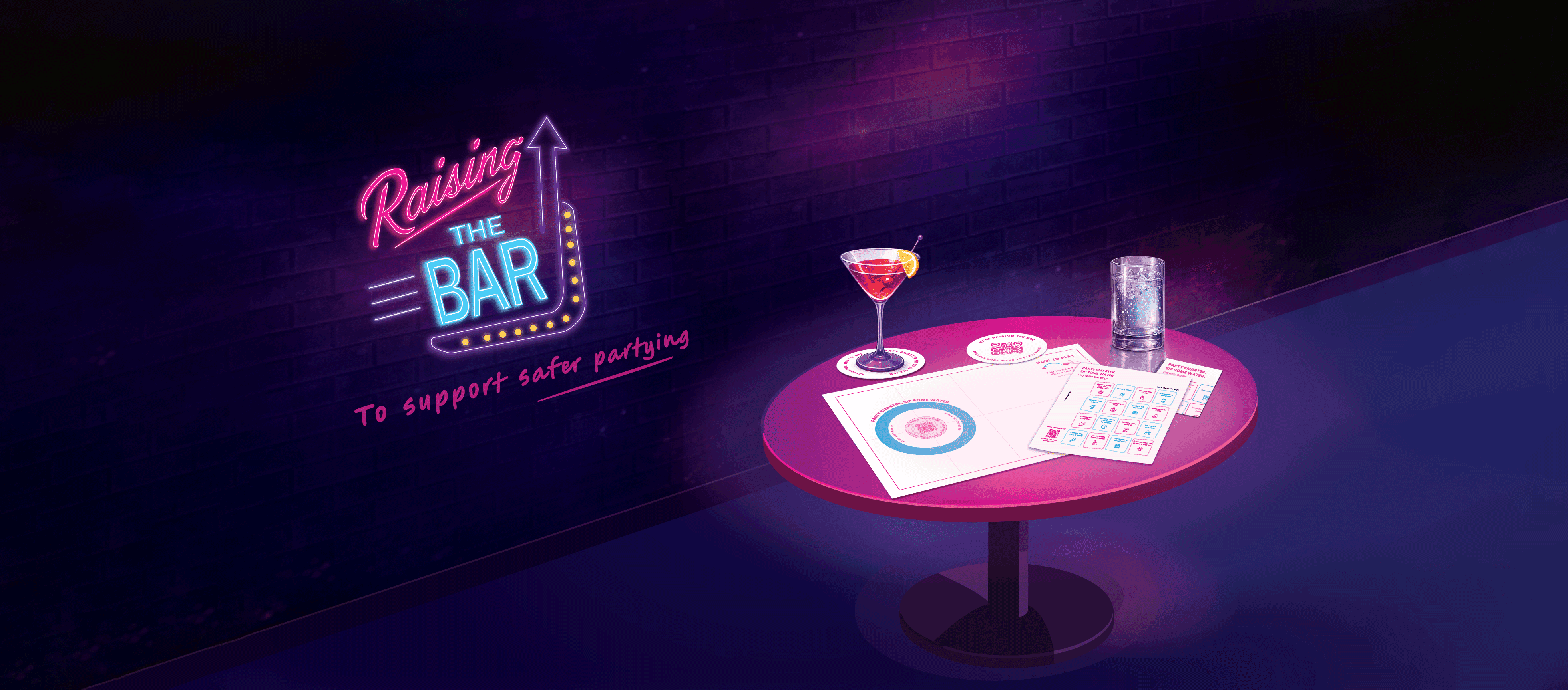
This project explores how to increase engagement with public health messaging in nightlife environments.
In collaboration with Ottawa Public Health, we designed a system of low-pressure, playful touchpoints embedded into everyday bar interactions. By leveraging familiar objects such as coasters, napkins, and placemats, the solution encourages safer choices in a natural and socially acceptable way.
This project explores how to increase engagement with public health messaging in nightlife environments.
In collaboration with Ottawa Public Health, we designed a system of low-pressure, playful touchpoints embedded into everyday bar interactions. By leveraging familiar objects such as coasters, napkins, and placemats, the solution encourages safer choices in a natural and socially acceptable way.
Project
Raising the Bar (OPH Collaboration)
Role
UX Designer (Research & Visual Design)
Duration
14 weeks
Tools
Figma, Illustrator, Photoshop
Project
Raising the Bar (OPH Collaboration)
Role
UX Designer (Research & Visual Design)
Duration
14 weeks
Tools
Figma, Illustrator, Photoshop
My Contribution
Contributed to concept development, visual design, presentation design, and the HUBBUB poster design, helping translate project insights into a cohesive system of engagement touchpoints across physical and digital channels.
My Contribution
Contributed to concept development, visual design, presentation design, and the HUBBUB poster design, helping translate project insights into a cohesive system of engagement touchpoints across physical and digital channels.
The Problem
The Problem
In fast-paced bar environments, attention is focused on social interaction rather than health messaging. Stigma further discourages engagement with substance use resources, leading to low real-world usage.
In fast-paced bar environments, attention is focused on social interaction rather than health messaging. Stigma further discourages engagement with substance use resources, leading to low real-world usage.

Fast-paced bar environment
Fast-paced bar environment

Stigma discourages engagement
Stigma discourages engagement
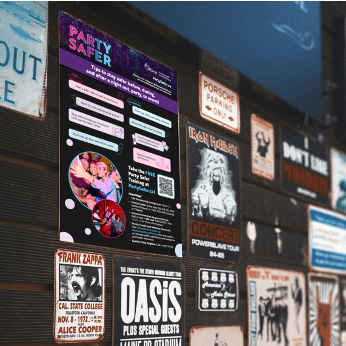
Existing resurces are overlooked
Existing resurces are overlooked
The Insight
The Insight
Engagement increases when health messaging is seamlessly integrated into familiar, everyday interactions rather than presented as formal or instructional content.
Engagement increases when health messaging is seamlessly integrated into familiar, everyday interactions rather than presented as formal or instructional content.
Key Insight: People engage more when messaging is embedded into familiar interactions.
Key Insight: People engage more when messaging is embedded into familiar interactions.
The Opportunity
The Opportunity
How might we offer an engaging hook to connect bar patrons with tools on party safer?
How might we offer an engaging hook to connect bar patrons with tools on party safer?
Our Concept
Our Concept
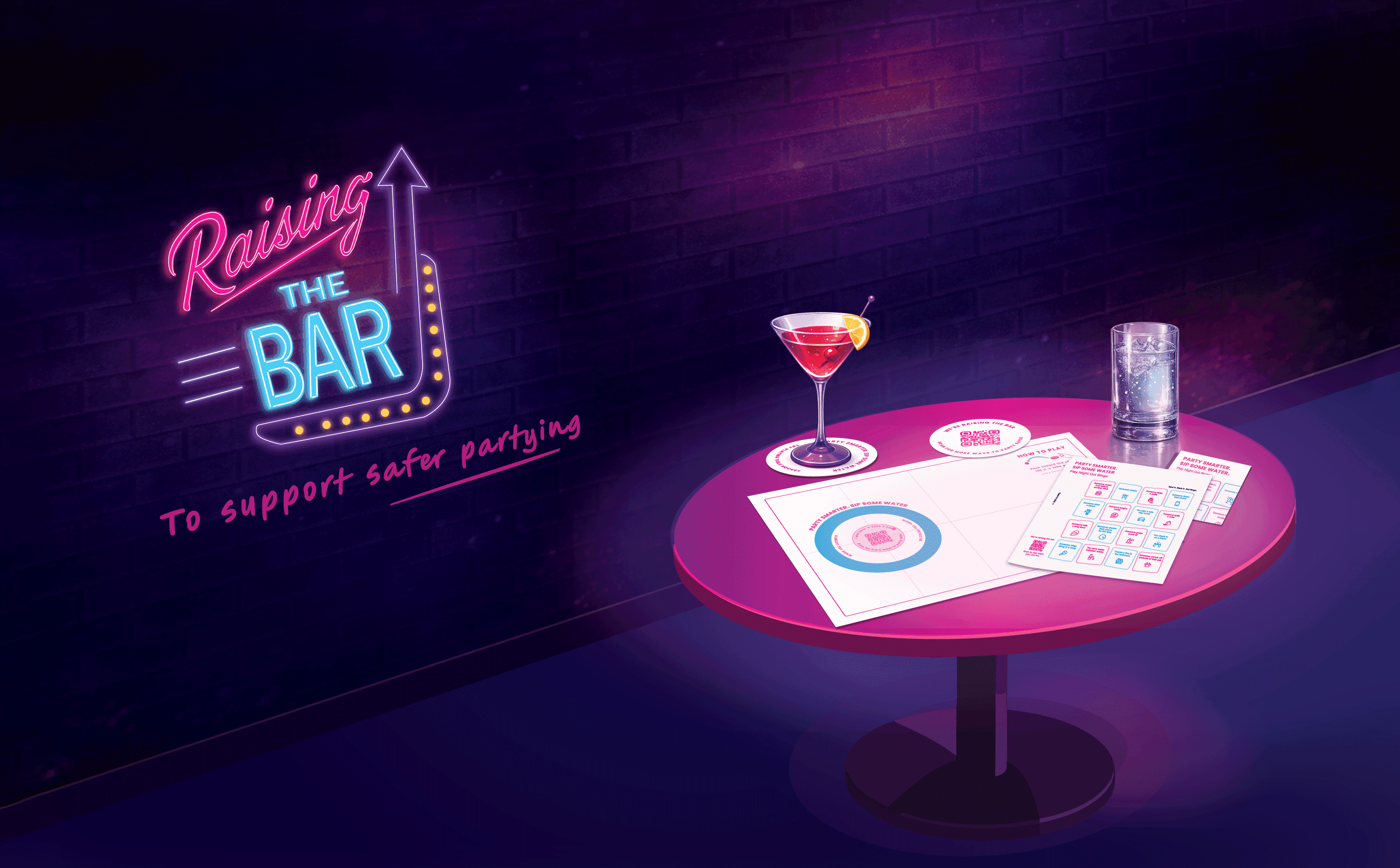
We designed a system of micro-interactions using familiar bar elements such as coasters, napkins, and placemats to create playful, low-pressure engagement points.
By incorporating game-like interactions into these touchpoints, the design encourages participation in a natural and social way, reducing resistance and making health messaging feel less formal or instructional. Together, these elements form a cohesive system that integrates physical interaction with digital support.
We designed a system of micro-interactions using familiar bar elements such as coasters, napkins, and placemats to create playful, low-pressure engagement points.
By incorporating game-like interactions into these touchpoints, the design encourages participation in a natural and social way, reducing resistance and making health messaging feel less formal or instructional. Together, these elements form a cohesive system that integrates physical interaction with digital support.
How the system works?
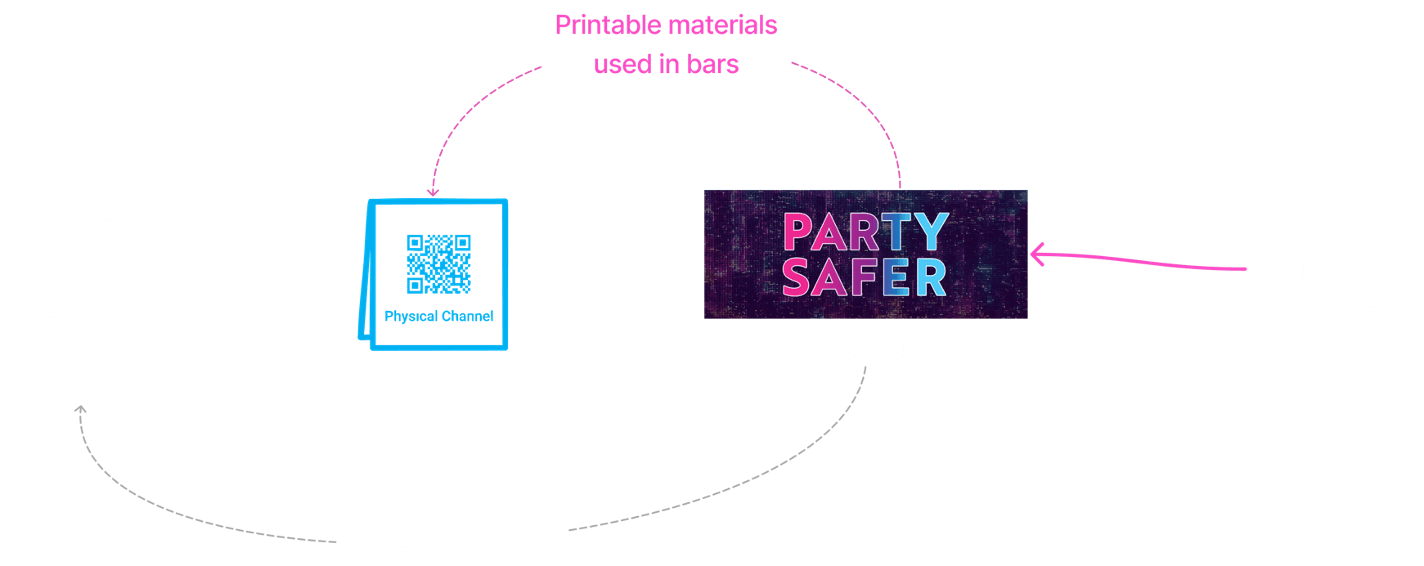
This system connects physical touchpoints in bar environments with digital resources, allowing users to seamlessly transition from in-the-moment interactions to actionable guidance through QR-enabled access.
By embedding access points directly into familiar objects, the design supports real-time decision-making without disrupting the social flow.
How the system works?
This system connects physical touchpoints in bar environments with digital resources, allowing users to seamlessly transition from in-the-moment interactions to actionable guidance through QR-enabled access.
By embedding access points directly into familiar objects, the design supports real-time decision-making without disrupting the social flow.
Assets Design
Assets Design
The system is composed of three touchpoints designed to guide users from quick access to deeper engagement. Each touchpoint plays a distinct role within the user journey.
The system is composed of three touchpoints designed to guide users from quick access to deeper engagement. Each touchpoint plays a distinct role within the user journey.
Coaster
Coaster
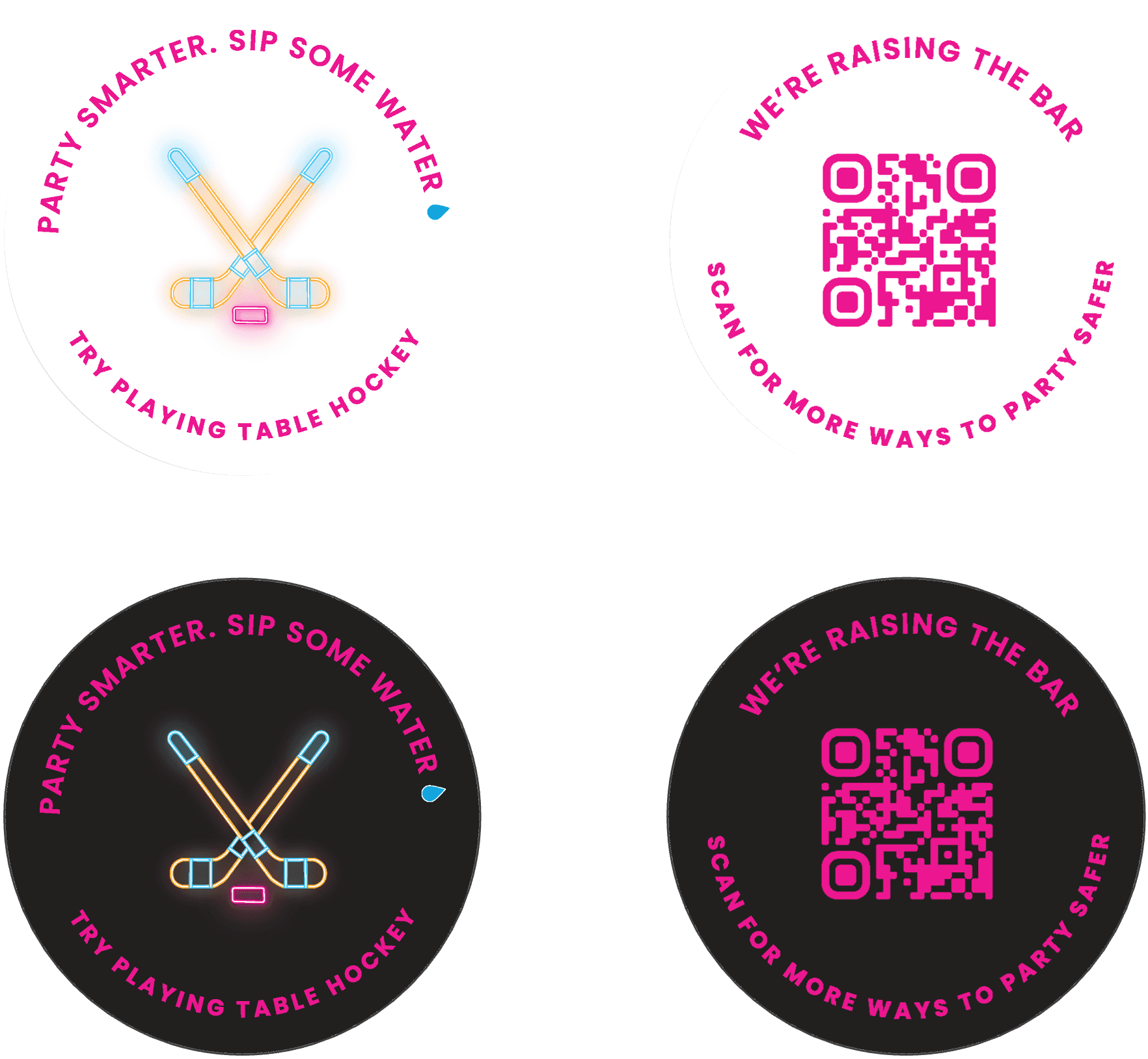
We designed coasters as an immediate entry point, as they are naturally within reach during real-time decision moments.
To increase relatability, we incorporated familiar local elements such as hockey, making the interaction feel culturally relevant and engaging within the bar environment.
We designed coasters as an immediate entry point, as they are naturally within reach during real-time decision moments.
To increase relatability, we incorporated familiar local elements such as hockey, making the interaction feel culturally relevant and engaging within the bar environment.
Design Decision
Design Decision
Napkin
Napkin
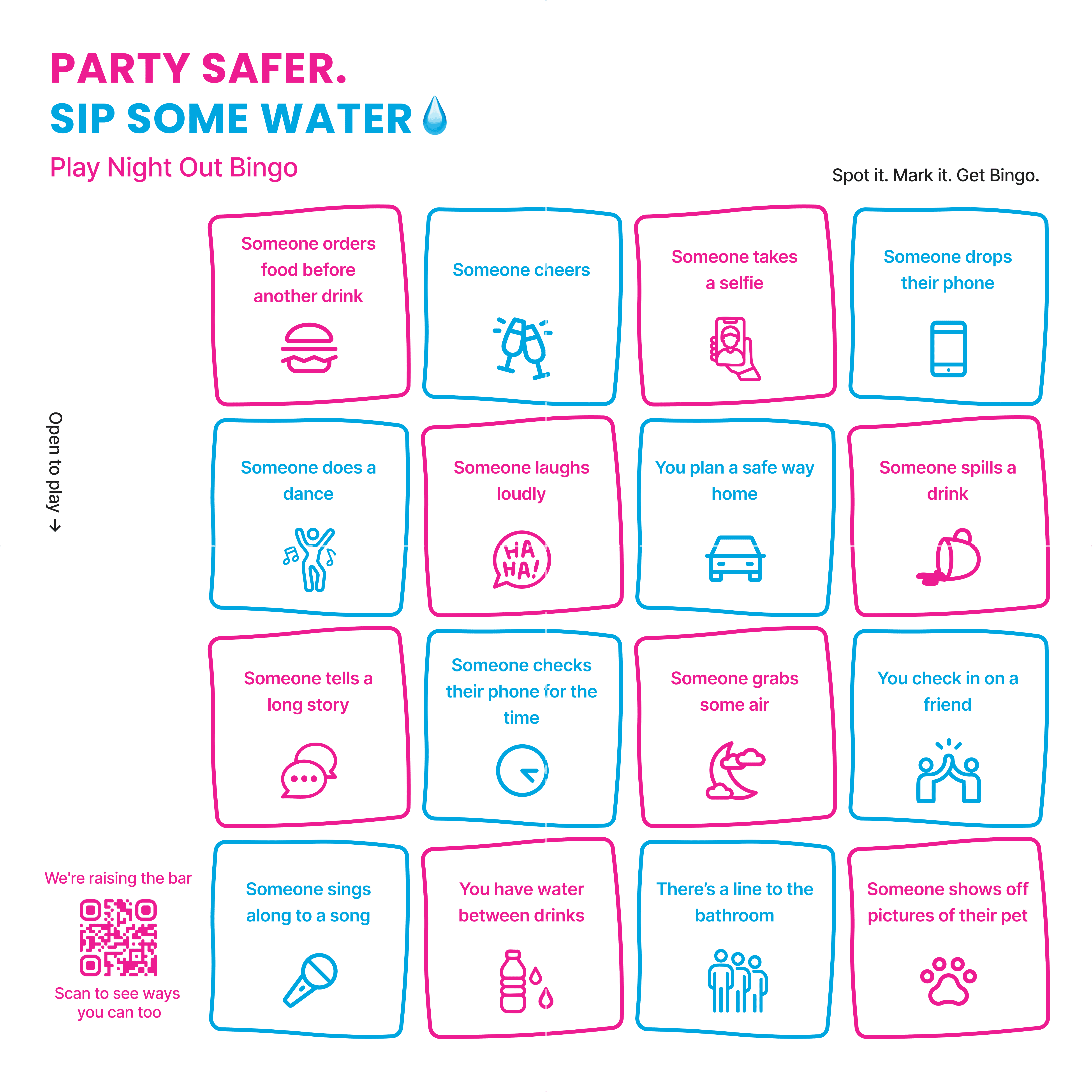
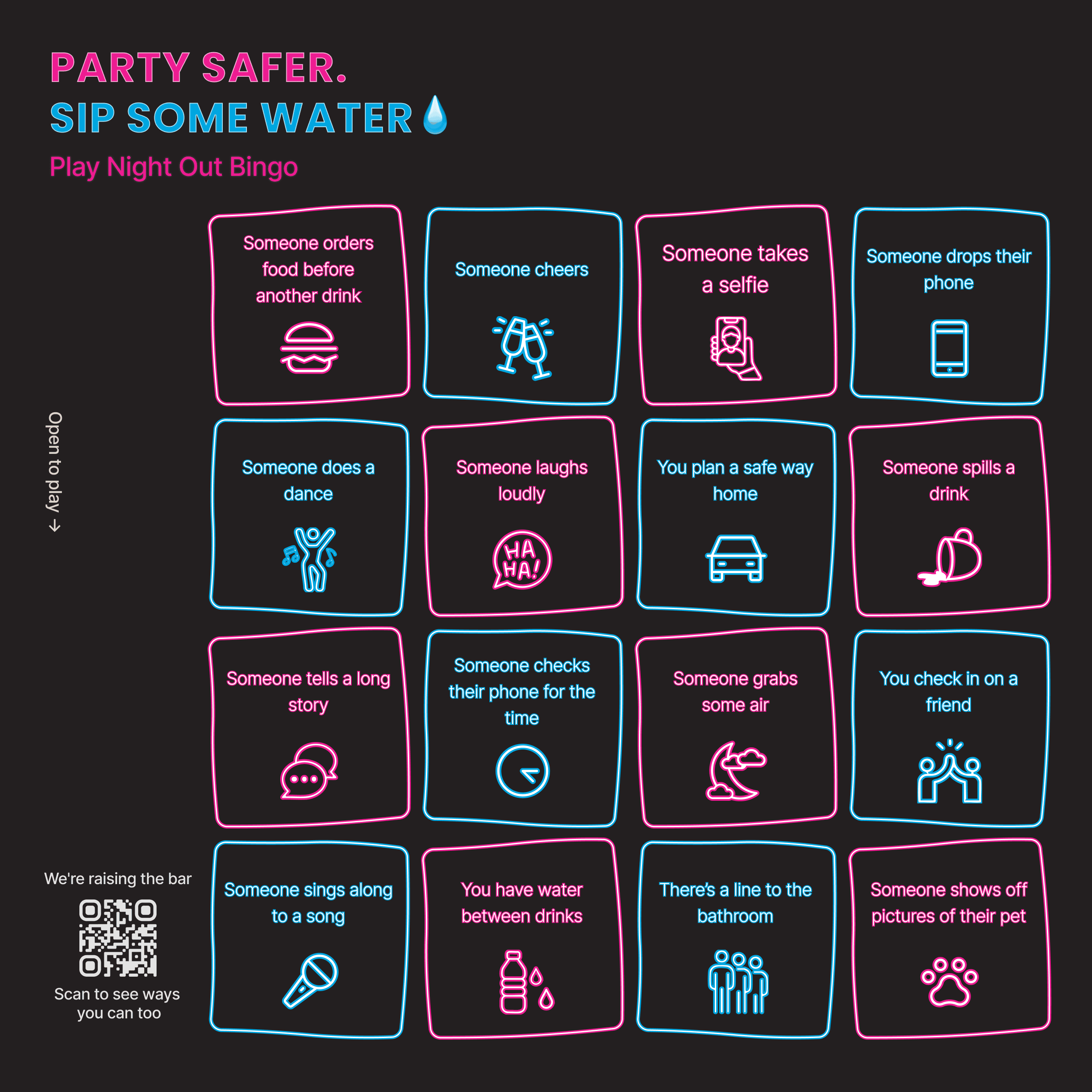
We chose napkins as a touchpoint because they are constantly handled during meals, making them an ideal surface for subtle, repeated prompts.
We embedded small, relatable prompts such as hydration and planning a safe way home into the interaction design.
These familiar, low-stakes moments help subtly raise awareness and encourage safer decisions without feeling intrusive or judgmental.
We chose napkins as a touchpoint because they are constantly handled during meals, making them an ideal surface for subtle, repeated prompts.
We embedded small, relatable prompts such as hydration and planning a safe way home into the interaction design.
These familiar, low-stakes moments help subtly raise awareness and encourage safer decisions without feeling intrusive or judgmental.
Design Decision
Design Decision
Placemat
Placemat
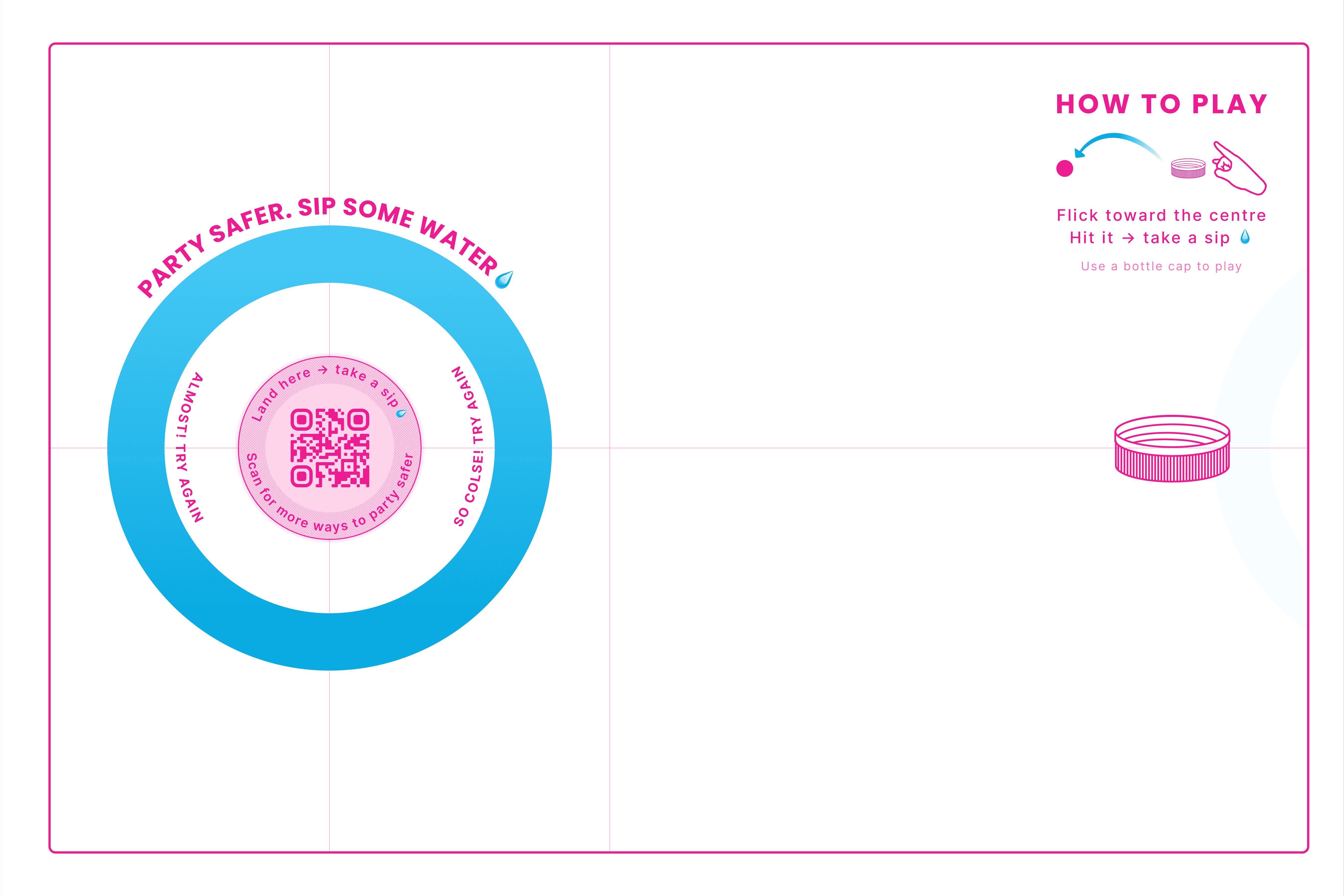
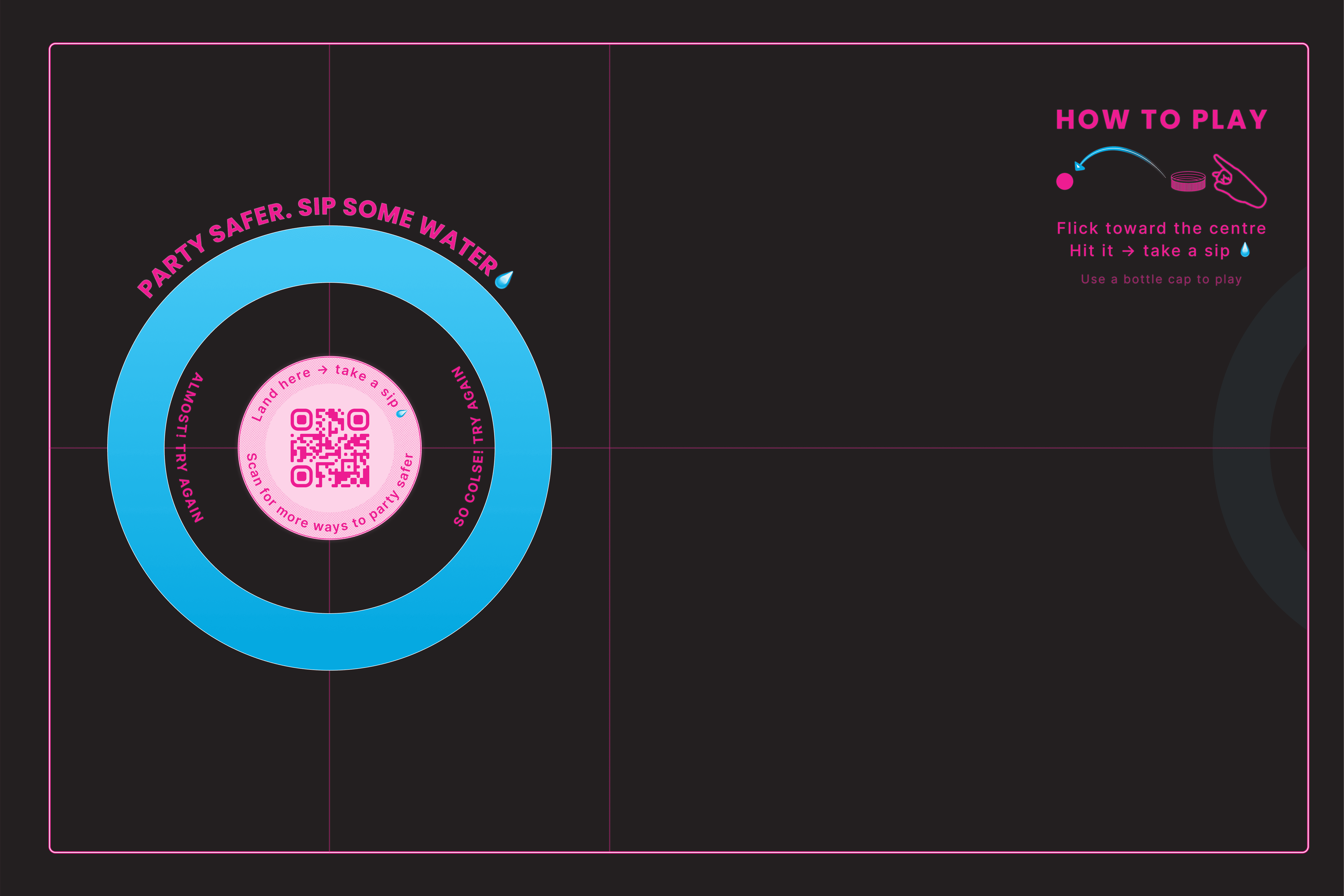
We designed the placemat to create a more immersive, interactive experience through a simple tabletop game inspired by curling, using bottle caps as game pieces.
This physical interaction encourages participation and draws users into the experience in a natural, social way.
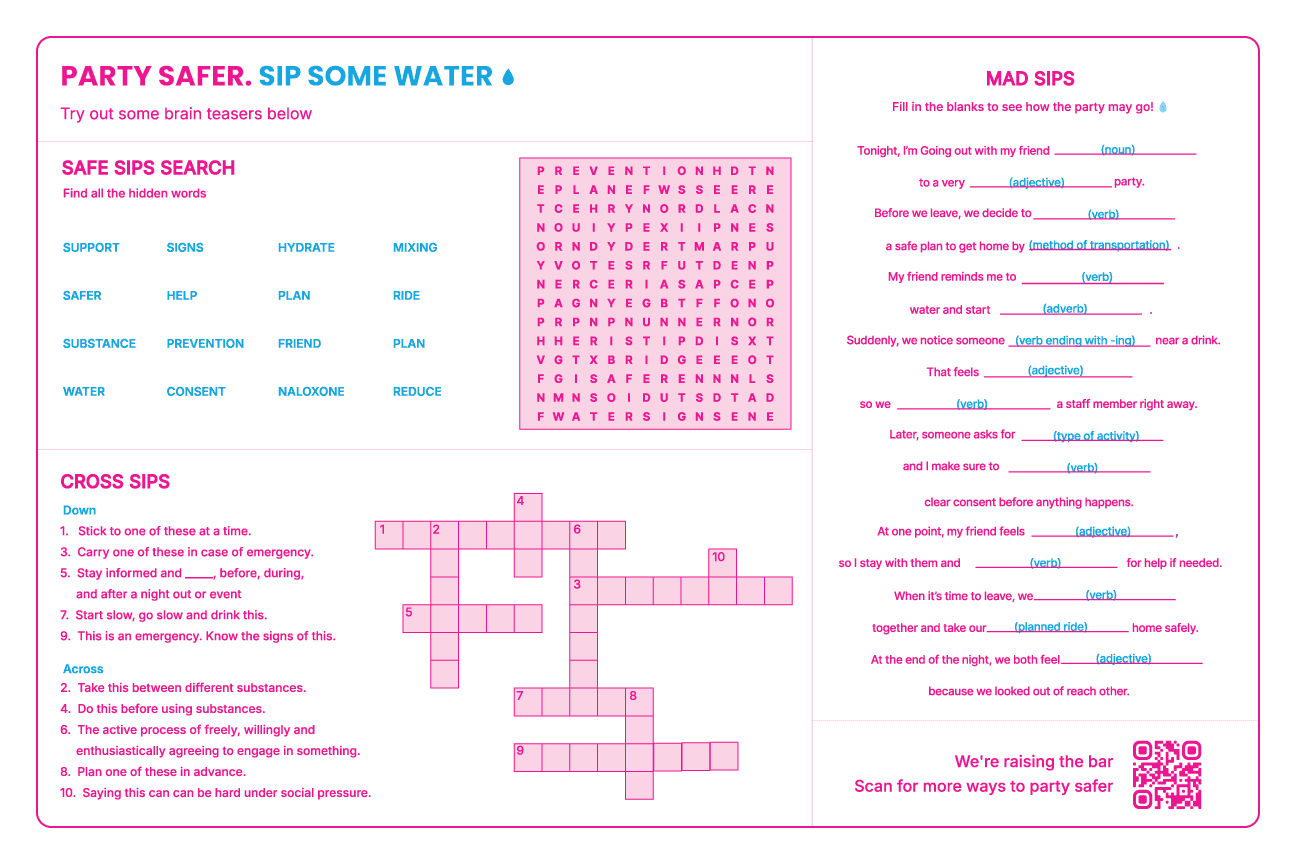
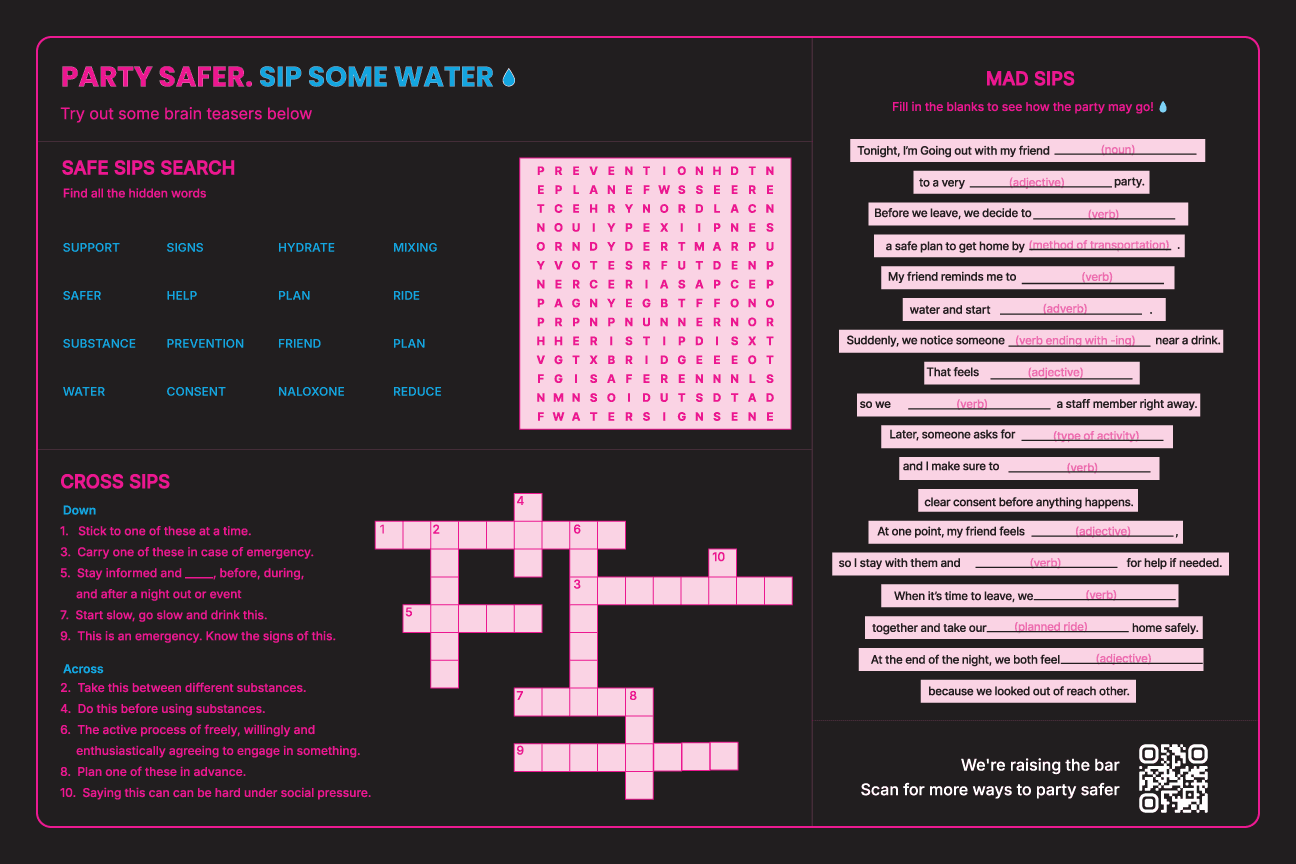
On the reverse side, we integrated curated safer-use tips from the Party Safer website, extending the interaction from play to awareness and providing actionable guidance.
We designed the placemat to create a more immersive, interactive experience through a simple tabletop game inspired by curling, using bottle caps as game pieces.
This physical interaction encourages participation and draws users into the experience in a natural, social way.
On the reverse side, we integrated curated safer-use tips from the Party Safer website, extending the interaction from play to awareness and providing actionable guidance.
Design Decision
Design Decision
The Impact
The Impact
This approach shifts engagement from passive exposure to active interaction. By shifting from direct messaging to indirect, embedded interactions, the design lowers the psychological barrier to engagement.
This approach shifts engagement from passive exposure to active interaction. By shifting from direct messaging to indirect, embedded interactions, the design lowers the psychological barrier to engagement.
In the short-term
In the short-term
• Immediate engagement at the table
• Prompts appear during interaction, not interruption
• Encourages small, safer actions (e.g. drink water, pace drinks)
• Immediate engagement at the table
• Prompts appear during interaction, not interruption
• Encourages small, safer actions (e.g. drink water, pace drinks)
In the long-term
In the long-term
• Repeated exposure builds familiarity
• Behaviours become easier to notice and repeat
• Supports safer decision-making over time
• Repeated exposure builds familiarity
• Behaviours become easier to notice and repeat
• Supports safer decision-making over time
The Recognition
The Recognition
Presented at HUBBUB 2026, our project received the highest number of audience votes. The project also received positive feedback from event attendees, faculty, Ottawa Public Health representatives, college leadership, and community stakeholders.
This recognition reinforced the value of using playful, low-pressure touchpoints to make public health messaging more approachable, memorable, and easier to engage with in real-world social settings.
The Reflection
The Reflection
This project highlighted the importance of meeting users in their context, rather than expecting them to seek out information independently.
One key challenge was balancing playfulness with clarity, ensuring that the message remains understandable while still feeling natural and non-intrusive.
Through research, we identified that low engagement was not due to a lack of resources, but a disconnect between when and how users encounter them. By focusing on this core insight, we were able to design a system where small, contextual interventions could influence behavior more effectively.
This demonstrates how addressing a key friction point can create a broader impact across the entire user journey.
This project highlighted the importance of meeting users in their context, rather than expecting them to seek out information independently.
One key challenge was balancing playfulness with clarity, ensuring that the message remains understandable while still feeling natural and non-intrusive.
Through research, we identified that low engagement was not due to a lack of resources, but a disconnect between when and how users encounter them. By focusing on this core insight, we were able to design a system where small, contextual interventions could influence behavior more effectively.
This demonstrates how addressing a key friction point can create a broader impact across the entire user journey.